
Eighty per cent, or 60 of the 75 companies that made their debut on the mainboard this financial year, ended their listing day with gains.

Mobile service provider Spice Communications has raised Rs 520 crore (Rs 5.20 billion) through its initial public offer, for which the issue price has been fixed at Rs 46 a share.
In 2024, the Securities and Exchange Board of India (Sebi) implemented significant reforms, focusing on cooling down the derivatives segment, enhancing transparency and accountability in small and midsised enterprise (SME) listings, and deepening the fund management ecosystem.
WNS is all set to list in the US after an initial public offer that has been priced well above the forecasts.
Bank of China Limited launched on Thursday the world's biggest initial public offering in six years in Hong Kong stock exchange.
Public sector major NTPC's follow-on public offer (FPO) managed to scrape through today, but raised questions about the state of the primary markets and the government's disinvestment programme.

'It could take the form of sporadic LoC violation through heavy artillery and mortar fire, focusing on border villages where the Hindu Dogra population is predominant.'

If the proposal gets Cabinet clearance, the disinvestment is likely to follow the initial public offering of Rashtriya Ispat Nigam Ltd, for which the prospectus has already been filed with the Securities and Exchange Board of India.

Shares of Life Insurance Corporation (LIC) of India hit fresh record lows amid sustained decline in Adani Group stocks. Its stock finished at Rs 567.8, down 2.9 per cent over its previous close. The state-owned insurer's market value is now down Rs 2.4 trillion, or 40 per cent, compared to initial public offering levels.

The company plans to raise Rs 5,000 crore by selling its shares to public.

Helped by the Offer for Sale route, a whopping Rs 45,300 core was mobilised through public equity markets in 2013, a growth of 25 per cent over last year.

In the current calendar year, small and medium enterprises (SMEs) have witnessed an impressive surge in initial public offerings (IPOs), surpassing the 2018 record. Over 150 SME IPOs have been introduced to the market, breaking the previous record of 141 set in 2018. According to data from PRIME Database, a primary market tracking firm, 147 companies successfully concluded their debut share sales by the end of October, raising a cumulative Rs 3,727 crore.

'We plan to launch new initiatives, including cash flow-based lending, to ensure borrowers are not burdened and can access funds more quickly.'
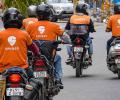
Food delivery major Swiggy has received approval from its shareholders for a $1.25 billion initial public offering (IPO), according to filings made with the Registrar of Companies sourced by Tofler. The Bengaluru-based firm plans to raise as much as Rs 3,750 crore (around $450 million) via a fresh issue and up to Rs 6,664 crore (around $800 million) through an offer-for-sale (OFS) component, the filings stated.

Finally, some good news for the Indian startup ecosystem. After four consecutive half-year periods of declining funding since 2022, the first half (H1) of 2024 has shown an upward trend compared to the second half (H2) of 2023. According to the India Tech Semi-Annual Funding Report H1 2024 by Tracxn, Indian technology (tech) startups raised $4.1 billion in H1 2024, marking a 4 per cent increase from $3.96 billion in H2 2023.

There is a reason this 11 year phenomenon is a rule as much as it is an observation. It speaks to the nature of man and what humans are like, explains Aakar Patel.
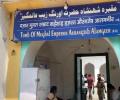
Senior RSS leader Suresh Bhaiyyaji Joshi's call to drop the Aurangzeb tomb controversy challenges decades of communal rhetoric in Maharashtra, igniting hopes for unity and a balanced historical narrative.

Reliance Retail Ventures Ltd (RRVL) is discussing a three-pronged plan that includes an additional divestment of $250-300 million this year, apart from what it has diluted in favour of the Qatar Investment Authority (QIA) and US-based private equity fund KKR recently.
The country's largest insurer LIC on Tuesday listed its shares at a discount of 8.11 per cent at Rs 872 per share on the NSE. On the BSE, the shares got listed at Rs 867.20 apiece, down 8.62 per cent over the issue price of Rs 949 a share. LIC had fixed the issue price of its shares at Rs 949 apiece after a successful initial public offering, which fetched Rs 20,557 crore to the government.

Supreme Court judge, Justice B R Gavai, expressed hope that the "current difficult phase" in ethnic strife-torn Manipur will be over soon with the assistance of the executive, legislature and judiciary and the state will prosper like the rest of the country. Justice Gavai, who led a delegation of Supreme Court judges that visited Manipur, called upon the people of the state to work together to restore peace and harmony. He also urged the people of the state to work together to restore peace and normalcy, and lauded the natural beauty he witnessed while travelling from Imphal to Churachandpur. He expressed delight in noting that training programmes were being imparted at the relief camps, and thanked the Chief Justice of Manipur High Court and the district legal services authority for their efforts. Justice Gavai also stressed the need for readmission of students who had to drop out of school due to the conflict and called upon the educational institutions and the public to ensure all students complete their education.

According to an analysis, about 44 companies, including the Public Sector Undertakings, raised a whopping Rs 47,867 crore (Rs 478.67 billion) between April 2009 and March 31, 2010, through initial and follow-on public offers.

Weeks after violent clashes over a court-ordered survey of the Shahi Jama Masjid, the district administration in Sambhal, Uttar Pradesh, has launched a campaign against encroachments and illegal power theft in the area around the historic mosque. The administration began removing encroachments on Sunday morning, focusing on clearing drains outside houses and shops. The operation uncovered an illegal stockpile of domestic gas cylinders in a house, and the electricity department unearthed illegal connections in four mosques and a madrasa. The Bhasma Shankar temple, which was reopened by the district administration, has resumed regular worship.
The Reserve Bank of India on Tuesday raised margins on all advances against shares, initial public offerings and issuance of guarantees to 50 per cent from 40 per cent.

Following the Reserve Bank of India's (RBI's) action against Paytm Payments Bank, participants in the fintech ecosystem have turned their attention to giving priority to compliance with regulatory norms. Fintech industry players say the episode will ensure adherence to such measures. Executives Business Standard spoke to said companies should have clarity on their requirements.

India has lodged a strong protest with Bangladesh over a now-deleted social media post by a key aide of Bangladesh's interim government that claimed certain areas of Indian territory should be part of that country. The post, which included a map showing parts of West Bengal, Tripura, and Assam as belonging to Bangladesh, was made by Mahfuz Alam, a de facto minister in the Muhammad Yunus-led interim government. The post sparked backlash and was subsequently deleted. India's External Affairs Ministry spokesperson Randhir Jaiswal reminded all concerned to be "mindful" of their public comments and emphasized the need for responsibility in public articulation.
Power Trading Corporation's initial public offering of 5.85 crore (58.5 million) shares was oversubscribed by about two times on day one, sources associated with the process said in New Delhi.

Considering the disvestment mop-up target of Rs 30,000 crore (Rs 300 billion) for financial year 2012-13, the government is thinking of optimising the collection from stake sales in central public sector enterprises (CPSEs).

It is also considering to mop-up Rs 50 crore through a pre-IPO placement.

For the third month running, investors opened over four million new demat accounts in February, showing growing household confidence in stock markets and their increased risk appetite. Over 13.12 million new demat accounts have been opened in the last three months, taking the total count close to the 150-million mark. Demat accounts are needed for trading and holding shares electronically.
Diwali fireworks are expected to continue on Dalal Street next week, with four companies collectively seeking to mobilise over Rs 6,600 crore through initial public offerings (IPOs). In terms of the amount raised, this is poised to be the busiest week of calendar year 2023. Tata Technologies (Tata Tech), a subsidiary of Tata Motors, could lead the charge with an IPO projected to be over Rs 2,900 crore. This will mark the first maiden share sale by a Tata Group firm in nearly two decades.

The ministry of railways has decided to withdraw its decision on sharing of convenience fee earned by IRCTC on online bookings of train tickets, the DIPAM secretary said on Friday.

'A major IT services firm that previously had a demand of 1,000 to 2,000 employees now requires 7,000 to 8,000 -- a sizeable jump from the previous quarter.'

Why are financial-technology (fintech) players moving back to India, or doing the reverse-flipping?

The Meerut Conspiracy Case was aimed at curbing communist influence in India. However, it fueled nationwide sympathy, shaping the course of leftist politics in the country.
SoftBank-based e-commerce marketplace Snapdeal has deferred its Rs 1,250 crore IPO, joining the list of startups that have decided to shelve their initial public offering (IPO) plans this year. Snapdeal, which competes with Amazon and Flipkart, filed a request this week with the Securities and Exchange Board of India (Sebi) to withdraw its draft red herring prospectus (DRHP) amid a sell-off in tech stocks worldwide. "Considering the prevailing market conditions, the company has decided to withdraw the DRHP. The company may reconsider an IPO in the future, depending on its need for growth capital and market conditions," a Snapdeal spokesperson said.

The Centre could further moderate its divestment target for 2024-25 (FY25), as it does not expect large receipts from asset sales - except some ongoing strategic ones, including IDBI Bank, which could spill over into next financial year. Also, it may drastically reduce its FY24 divestment target of Rs 51,000 crore. "We are still evaluating the Budget estimates for FY25. "New big-ticket asset sales are unlikely.
The government and the Life Insurance Corporation of India (LIC) are planning a campaign to give a big push to participation by retail investors, that includes opening of demat accounts for policyholders in IDBI Bank, in the run-up to its initial public offering (IPO). The campaign will aim to make retail investors as well as LIC policyholders aware of India's largest public offering, said an official. In an effort to give LIC policyholders a chance to own a part of the insurance company, the government has reserved 10 per cent of the issue of IPO for its policyholders.

Three marquee exits accounted for nearly 60 per cent of the total exit value -- BillDesk's acquisition by PayU for $4.7 billion, Paytm's $2.5 billion initial public offering (IPO), and Zomato's public market debut of $1.3 billion.

Oravel Stays - which operates hospitality tech firm OYO - on Friday pre-filed its Draft Red Herring Prospectus with stock market regulator Sebi, sources said. Sources close to the company told PTI, OYO may launch its initial public offering (IPO) around Diwali this year. Unlike the traditional route where companies have to launch the IPO within 12 months from the Sebi approval, or final observation; in the pre-filing route, an IPO can be floated within 18 months from the date of Sebi's final comments.
